
Mungo Homes has opened sales at North Cove, 89 More Homes in Carolina Forest, 89 single-family homes on River Oaks Drive in Carolina Forest, priced from the high $300s. The pitch is familiar: nine floor plans, a pool and cabana, fiber and natural gas, and a list of “premier” schools and shopping nearby.
What the announcement doesn’t mention is who pays for the roads, classrooms, drainage and emergency services those 89 households will use. Much of that bill lands on people who already live here.
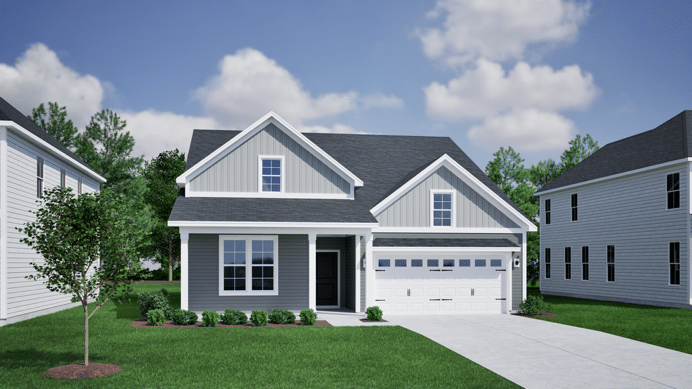
This project represents a significant addition to the community, emphasizing the importance of understanding the implications of 89 More Homes in Carolina Forest in terms of infrastructure and local resources.
This isn’t a story about one builder. North Cove is one more piece of a pattern Horry County has repeated for two decades: approve the rooftops now, fund the infrastructure later, and ask existing residents to absorb the gap.
The press release names three schools as selling points: River Oaks Elementary, Ocean Bay Middle and Carolina Forest High. Carolina Forest High is the most overcrowded school in the entire district, projected at 120% of functional capacity for 2026-27.
| School named in the ad | What the district’s own numbers show |
|---|---|
| Carolina Forest High | Most crowded school in HCS; ~2,825 students; projected 120% capacity for 2026-27 (Post and Courier) |
| River Oaks Elementary | Hit 166% capacity before two new elementary schools opened to relieve it (Post and Courier) |
| Ocean Bay Middle | Open question: current capacity figure not confirmed for this piece |
Taxpayers have already paid to chase this growth. The district’s capital plan put $128 million into two new Carolina Forest elementary schools, Ten Oaks and Pine Island, and $33 million into renovating Carolina Forest High. Those schools pulled the area’s elementary schools out of the red zone. The high school got no relief: a second Carolina Forest-area high school was considered and left off the district’s top-10 priority list.
Every child in North Cove’s 3-to-6-bedroom homes eventually walks into that high school. A builder can market a school it never paid to build.
North Cove’s front door is River Oaks Drive, still a mostly two-lane road. The county’s plan to widen it to four lanes carries a $142 million price tag, funded by the RIDE IV sales tax. The county’s own project page listed $0 spent and the work only under a design contract, with a 2025–2030 window (Horry County RIDE IV).
Councilman Dennis DiSabato has said he hopes the widening is done by 2029. Even on that timeline, many more cars will hit River Oaks before construction begins. North Cove’s 89 driveways join Waterway Plantation, The Bluffs, Berkshire Forest, Village Oaks and hundreds of homes planned on the old River Oaks Golf Club land.
We’ve seen this movie. Carolina Forest Boulevard got the same complaints for years until a RIDE III widening finally caught up (Horry County). DiSabato himself said the River Oaks concerns sound exactly like the Boulevard’s did before it was widened.
The hidden cost: RIDE IV is a sales tax. Every resident pays it at the register, whether they live in North Cove or Loris. The homes get approved first; the road arrives years later, on everyone’s tab.
Carolina Forest has flooded before. In the October 2015 storm, at least 11 homes in BelleGrove went under when Black Creek spilled onto International Drive; county officials said most Carolina Forest drainage was built to handle only a 25-year storm.
The county’s own resiliency report names development as part of the problem. It lists reduced water storage in floodplains and wetlands, caused by development, among its key flood risks (Horry County Resiliency Report). One report found Horry County lost 20% of its wetlands in 25 years.
New subdivisions must meet the stormwater ordinance and add retention ponds. But roofs, driveways and streets don’t absorb rain, and the effects add up downstream, across dozens of approvals, long after any one builder has sold out. When drainage fails, county crews and county budgets handle the cleanup.
Horry County’s new impact fee schedule, in effect since July 20, charges a 2,000–2,500 sq. ft. home $2,392. Homes of 1,500–2,000 sq. ft. pay $2,050. Our estimate: North Cove’s 89 homes (1,693–3,215 sq. ft.) will generate roughly $200,000–$250,000 in total county impact fees.
| Cost tied to growth on this corridor | Amount |
|---|---|
| North Cove’s total impact fees (estimate, all 89 homes) | ~$200,000–$250,000 |
| Carolina Forest High renovation | $33 million |
| Two new Carolina Forest elementary schools | $128 million |
| River Oaks Drive widening (RIDE IV sales tax) | $142 million |
The gap is wider than the numbers suggest. The county’s impact fee consultant told council the fees must fund new growth and cannot fix existing problems. And state law limits what the fees can pay for at all; when voters approved them, officials noted council would have to seek a change to state law for broader uses like schools.
So the school buildings come from school bonds and property taxes. The road comes from the sales tax. The drainage comes from the stormwater fee. The builder’s direct contribution is a rounding error.
The homebuilders’ association argues the opposite risk: that higher fees push up prices for working families. That’s a real tension. But someone pays for growth either way; the only question is whether it’s the buyer of a new home or every resident already here.
Horry County Police have hired 51 officers so far in 2026 and 54 in 2025, and council raised the starting salary to $61,800 in July. A department spokesperson put it plainly: with the county growing this fast, they’re just trying to keep up.
The department’s annual call volume has grown by nearly 50,000 calls since 2016. Carolina Forest alone drove more than a third of the old North Precinct’s calls, which led the county to borrow $25 million in bonds for the Central Coast Complex and a new precinct.
Salaries, cruisers and fire engines are recurring costs. Impact fees can help build a station once; they don’t pay the officer inside it every year after. That falls to the general fund, which means property taxpayers countywide.
North Cove is legal, and Mungo Homes is doing what builders do. The questions belong to the people who approve these projects: Horry County Council and the Planning Commission.
Call your council member before the next rezoning on River Oaks Drive comes up. Growth is coming either way. Whether it pays its own way is a choice.
89 More Homes in Carolina Forest – The impact fee total for North Cove is our estimate. Ocean Bay Middle’s capacity figure is still open.
89 More Homes in Carolina Forest – Mungo Homes North Cove press release
89 More Homes in Carolina Forest – WMBF: 20 Horry County schools over capacity (Feb 2026)
89 More Homes in Carolina Forest – Post and Courier: Horry County schools over capacity
89 More Homes in Carolina Forest – Post and Courier: Carolina Forest attendance plan
89 More Homes in Carolina Forest – WBTW: HCS capital plan costs
89 More Homes in Carolina Forest – My Horry News: HCS five-year priority list
89 More Homes in Carolina Forest – Horry County: River Oaks Drive RIDE IV project
89 More Homes in Carolina Forest – Horry County: Carolina Forest Boulevard RIDE III project
89 More Homes in Carolina Forest – My Horry News editorial: River Oaks Drive widening
My Horry News: RIDE IV and development
My Horry News: BelleGrove flooding (2015)
Horry County Resiliency Report summary
WMBF: wetlands loss and regulation
My Horry News: 2026 impact fee ordinance
NMB Times: sliding-scale impact fees
My Horry News: council mixed on impact fees
WBTW: impact fee referendum
WMBF: impact fee schedule and homebuilders’ concerns
WMBF: HCPD recruiting to match growth (Aug 2026)
My Horry News: first responder call volume
WMBF: new Carolina Forest precinct


